History:
The rights of a minor league baseball player has been a subject of controversy for as long as the minor league system was started. The issues started when MLB was given an Antitrust law exemption by congress in 1922. The exemption allows MLB to Unilaterally set salaries for Minor-Leaguers below the minimum wage. Essentially, it made MLB a legal monopoly. Because MLB is legally allowed to write contracts and enforce agreements after a player is selected in the amateur draft, minor leaguers have no say in their salary. This would be illegal under federal laws if not for the exemption, which is why baseball is the only sport with an issue of inhumane pay and conditions.
The closest logical reason as to why congress granted MLB this exemption was to eliminate all competition involving other “Major Leagues” back in the early 1900’s. Back in the early days, there was a league called ‘The federal League’. It was a threat to the American and National leagues, leading the AL and NL to merge, and the antitrust exemption was signed. One of the reasons it was given being that personal effort, not related to production, is not a subject of commerce and baseball therefore isn’t subject to federal regulation.”
In Our Era:
The salary for each player varies between what level the player is at. The minimum salary per week is $400 at the rookie levels, $500 at low and high A, $600 at AA and $700 at AAA. The players are only paid for the duration of the leagues season. The leagues season does not include spring training, therefore, they go without pay from most of September to the beginning of April. Their total salary for a seasons worth of work ranges from $4,800 to $14,000. Minor Leaguers before the 2021 Lockout were responsible for their own housing.
Change In The Right Direction: 2022 Collective Bargaining Agreement:
Although Minor League players rights are still an issue, there were positive gains that came from the conundrum of the lockout. The first and foremost of the gains is their addition to the MLB Players Union. That means that after over a century of misrepresentation, Minor League Players now has a say at what goes on in the Baseball world. The 2nd is the responsibility of housing players. Teams now are responsible for housing all minor league players unless they are on a 40-man roster contract. Those are 2 issues that MLB should rightfully be credited for solving. However, there is still a lot more work to be done.
Where’s The Money?
Base salaries for a player are still very low, as some players only can make about $4,000/year depending on their level. The most disappointing detail is that Commissioner Rob Manfred believes that it is 100% ok to be paid as they are. When pressed about minor league wages at the 2022 All-Star Game in Los Angeles, he explained, “I kind of reject the premise of the question that minor league players are not paid a living wage. I think that we’ve made real strides in the last few years in terms of what minor league players are paid, even putting to one side the signing bonuses that many of them have already received”.
Many were outraged by Manfred’s comments, prompting figures such as Advocates for Minor Leaguers executive director Harry Marino, who issued the following statement following Manfred’s comments: “Most Minor League baseball players work second jobs because their annual salaries are insufficient to make ends meet. The commissioner makes an annual salary of $17.5 million. His suggestion that Minor League pay is acceptable is both callous and false.” According to a three-year study that was released to The Athletic, a salary of around $35,000 would meet ends and bring players above the federal poverty line.
Player Interviews:
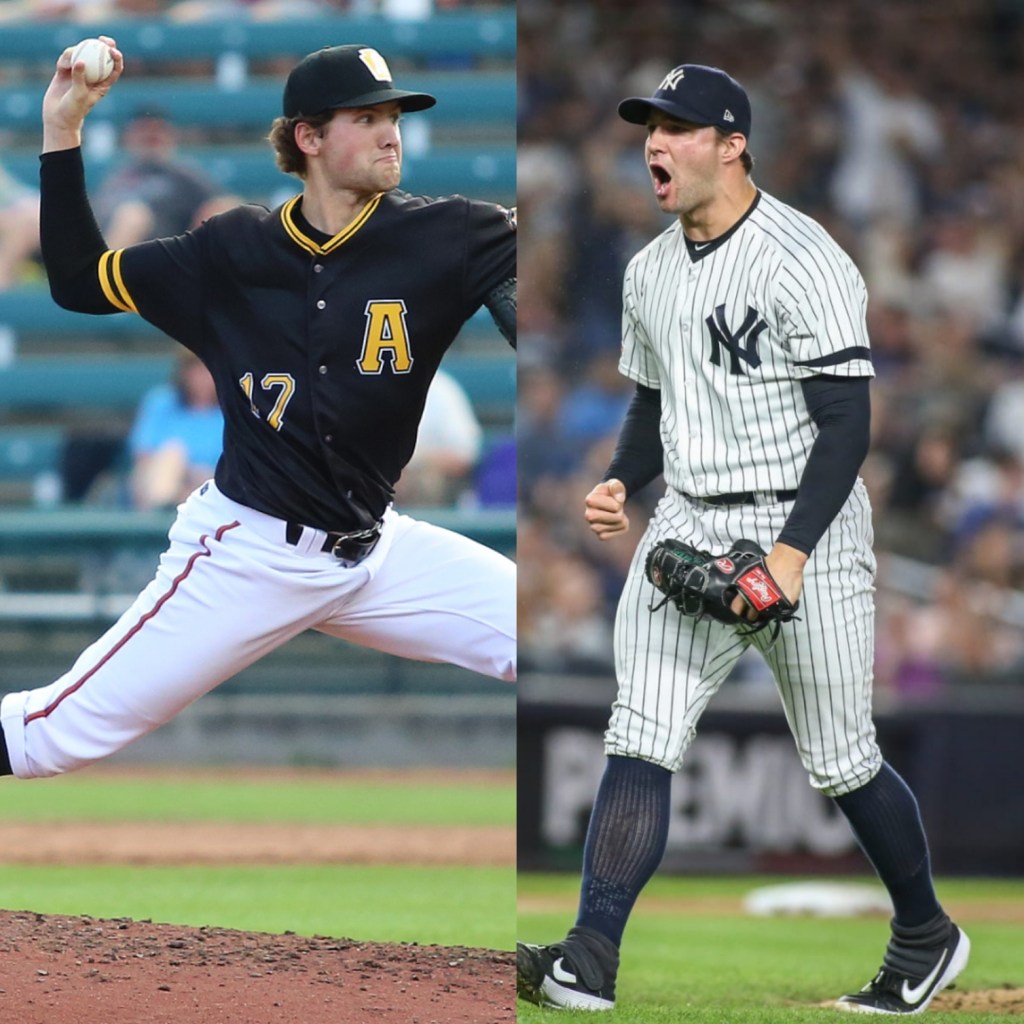
With all the issues we’ve pointed out so far, we thought it would be best to hear from a former Minor Leaguer, and a current Major League veteran, both with front hand experience with the issues. We Talked with Yankees’ RHP Tommy Kahnle who had 6 years of MiLB service with the Yankees and Rockies establishing himself now as a MLB veteran, and former Pirates RHP Austin Coley, who spent 5 years in the Pirates system, making it up to AAA.
- What was your experience like on draft day?
Coley: “Man this was so fun. I knew I had a good chance of going on day 2, so we had a lot of friends and family over at the house. The feeling of being selected and knowing that you were about to embark on a great journey was such a thrill.”
Kahnle: “My experience on draft day seemed pretty standard. I was up at my high school summer league field up in the booth watching the draft on a computer. I was with my Dad and 3 coaches. I left to go get Taco Bell and while in line I received a call from the Yankees. They told me they were going to select me with the next pick they had. I had received a few other calls that day from teams and so did my agent. I ended up getting back to the field and next thing you know I saw it on the computer that the Yankees had drafted me in the 5th round with the 175th pick. It was a pretty exciting feeling and then I went back to my Mom’s house where my friends and some family were waiting to congratulate me.”
2. What was your first day working with the new organization like?
Coley: “Eye opening. Coming from college baseball, everything was pretty different. Half of the team spoke Spanish, which was new for me. It’s exciting for sure, but I definitely felt a little out of my comfort zone.”
Kahnle: “My first day with the Yankees was a pretty wild one. I went down to NYC to get my physical. This was in August because I had gone to the Cape Cod League to pitch more and try to negotiate more money for my signing bonus. After completing my physical, I was in a car service down to Aberdeen to join the Staten Island Yankees in the New-York Penn League which is a Short-Season A ball league in the minors. From there I was with my team for the rest of the summer.”
3. What were the challenges of your first few years in the minors?
Coley: “I’ll tackle this question with baseball and non baseball answers. Baseball wise, it took me a little while to settle in and find my stride. I was trying to do too much at first. I had to adapt to the professional game and trust that I was good enough to compete. Non baseball wise, the lodging and food situation was tough. We weren’t given a place to live in Low A, so finding that was a headache. And not many meals were provided. Also being away from family was hard.”
Kahnle: “My first season I did not encounter many challenges on the field or off the field. I was just very happy to be playing pro ball and traveling the northeast. The only major struggle I think I encountered my first few years was living paycheck to paycheck. I did not make a lot of money my 1st couple seasons in Short A, Low A and High A. Back then in 2010-2012, I was making anywhere from $1,200 to $1,400 per month and that was only in season. Besides the money, I did not mind the travel (long bus rides), living situations (having 4-5 roommates in a 2 bedroom apartment) or facilities where we were playing at. I thought I was well accustomed to the grind of baseball coming from a family of not always having money and playing at a small division 2 college. I will say that back when I was coming up through the minor leagues we did not have access to the things that current minor leaguers do today. 10-12 years have made a huge difference in the minor leagues and what is available to the younger generation today.”
4. What changes as you progress closer to the big league level?
Coley: “The game sped up. Players got better. The game got harder.”
Kahnle: “The changes as you progress closer to the big league level is obviously you get paid more as you progress up through the minor leagues. The meal money we got each day also increased as you were promoted through the minor leagues.”
5. Would you consider life during the season humane?
Coley: “Yes it was humane. It wasn’t 5-stars, but it was certainly livable for me. I would have loved to have been paid more or experienced better living conditions, but it was certainly humane.”
Kahnle: “I think that the living conditions back when I was in the minor leagues were not inhumane. Most places we lived in were fairly decent apartments/houses. I do think that the salary that we were being paid was not right. It was very hard to make a living when you were not playing in the minor leagues. So many of us were forced to get off-season jobs in order to make a living when we were not playing baseball. That was always the hardest part of minor league baseball life. I only worked one offseason but I ran out of money at some point and I worked at a car wash in the dead of winter. It was miserable”
6. Did you see a difference in how people are treated differently than others? (Example: top prospects and first round picks)
Coley: “Yeah prospects definitely received more chances. If a team invests a lot of money in a player, they were going to get every chance to succeed. Which is understandable. On the other hand, late draft picks only got one chance to show their talent. “
Kahnle: “When I was in the minor leagues, I will say I did feel like Top prospects were given potentially different treatment compared to other minor league players in that system. I wouldn’t say it was a huge difference. The expectations of a minor leaguer 10+ years ago was close to that of a military academy. I do think that helped a ton of players today including myself. There are obviously things today that would’ve helped us back then as well.”
7. How hard was it to transition to life after baseball? What was that like? (Coley only)
Coley: “This is hard. Something that more people should talk about. You truly have to grieve your career to move on and find something that excites you just as much.”
8. What would be your best advice to a current minor leaguer that is struggling to live as a minor league player?
Coley: “Make sure to prioritize perspective. One game, one pitch, one inning doesn’t matter. It’s the big picture to focus on.”
Kahnle: “I think I would tell that player that the game we play is a game of failure. This game isn’t easy and from failure there are always positives. When I was down and struggling myself I would always look at the positive side of things and remember you are playing the game you love from when you were a kid. Take every second as if it is your last and have fun with it.”
9. What are some reasonable things MLB can do to alleviate players issues? (Coley only)
Coley: “MLB needs to keep investing in the minor leagues. The players are their assets. Prioritize them and give them the tools they need to succeed.”
10. Do you think MLB is moving in the right direction in the battle for MiLB player rights? (Coley only)
Coley: “I do. The investment in players has improved a lot since I started in 2014. More can be done, but the arrow is trending up.”
Kahnle: I honestly do not know if I have seen much change since the lockout. But, I will say there has been tremendous positive change since I was last in the minor leagues and it has gotten so much better for the minor league players today compared to 10-13 years ago when I was coming up through the Yankees system.
To conclude:
Minor Leaguers across Time have had different experiences with playing, living, and competing on a day-to-day basis for many years. Although there has been positive change, it’s still an issue across the globe, and hopefully one day, we can live in a world where minor leaguers are able to live like normal people.

 BSBWRITES
Leave a comment