
With the recent bombshell news of a group in Salt Lake City led by former Utah Jazz owner Gail Miller pursuing a potential MLB expansion franchise, it got me thinking about how I would handle a potential MLB expansion. With as many potential possibilities for this expansion, including the number of expansion franchises, locations, drafts, and more, there’s lots of room for variations between potential plans. Today, I will be outlining my plan for MLB expansion in the coming years if I was commissioner of MLB.
Establishing Guidelines for Cities to be Considered
In addition to the Salt Lake City group who are pushing for an expansion franchise, there have been multiple others throughout the year. For example, a group in Nashville has been heavily pushing for a long time now. Which places make the most sense for MLB to expand to? Well, that comes down to a few factors. These factors include, population of the city, ability to support a sports franchise, passion of the groups who would take on the project, teams close by, and more.
Based on population numbers obtained by the United States Consensus Bureau’s measurements taken in 2009, we can gauge a rough idea of a minimum and maximum population needed to be considered for an expansion franchise. The lowest population recorded by the Bureau in 2009 was the Milwaukee Brewers, who were measured at a metro population of roughly 1.560 million residents. Now that we’ve established a minimum amount of citizens needed to be able to support a franchise, we need to also keep in mind what baseball has the potential to reach. According to the Bureau’s measurements in 2009, the maximum population of a city with an MLB franchise were the New York Yankees, and New York Mets, both having populations around 19.07 million residents. So, when looking at the numbers attained by the United States Consensus Bureau’s measurements in 2009, an MLB expansion team should have a population around 1.5 million to 20 million residents.
Another key factor that would need to be considered would be the ability of the city to support a franchise. Some ways we could gauge this index would be through the popularity of other sports teams in the same city. For example, when referring back to the Utah Jazz and the potential Salt Lake City expansion, the Jazz averaged 18,206 fans per game, which was good enough for 13th in all of the NBA. So, using this example, we can see a potential way to gauge interest in an expansion franchise. Another way to gauge this interest index would be through the attendance numbers of the local triple-a teams. Many of the cities we will be examining in this article already have triple-a teams, which is a great way to find out the interest of baseball in the area.
Given all these factors, we can gauge teams on what I’m going to refer to as the interest index, which is a 1-10 scale of the factors mentioned above.
Examining Cities to Consider
Before I continue on to city breakdowns, I will only cover the 4 cities in depth I think make the most sense to expand to. While there will only be 4 cities covered in depth below, other cities I think could make a lot of sense to consider would include a return to Montreal, Vancouver, Portland, and Buffalo. All of these cities make a lot of sense, but for reasons such as location potentially hurting new fanbases, they will be put more to the side. Other cities that are not part of this analysis include Las Vegas, and Orlando, as they are both potentially rumored to be relocation franchises within the coming years. If Las Vegas wasn’t in relocation propositions, they would without a doubt be included in MLB expansion.
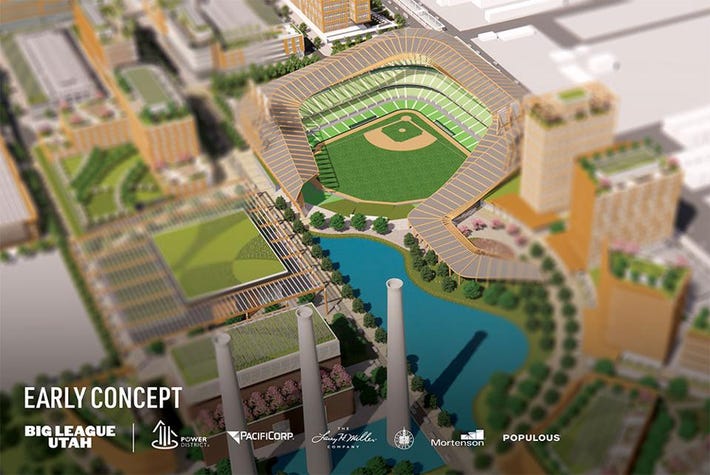
The first city that has gauged the most overall interest and discussion recently would be the previously mentioned Salt Lake City. Salt Lake was measured at a small population of just 200,133 residents in 2020, which would obviously be concerning for a potential expansion club. Though, given the popularity of the Jazz as previously mentioned, the City has very obviously proved it can support a team strongly. With Utah as a whole also not having many professional sports teams throughout the state, an expansion franchise would have a great chance to really catch on when it comes to residents of Utah as a whole. As of 2021, the triple-a affiliate Salt Lake City Bees averaged attendance numbers of almost 4,700 fans per game, which was overall on the higher end of the triple-a level. With the expansion group being aggressive and passionate about bringing baseball to Salt Lake, I think they make a great candidate for one of the next expansion teams. I would give them an interest index rating of 8/10.
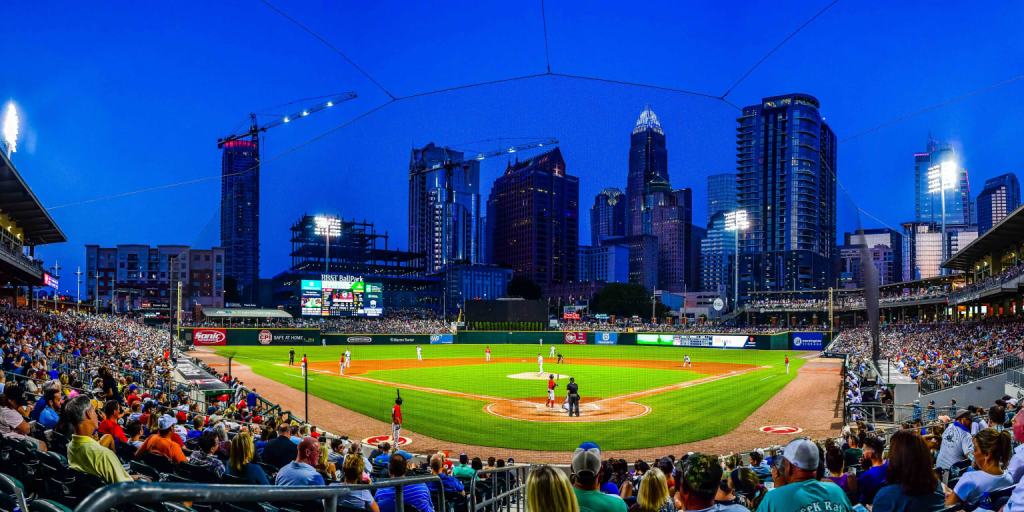
The second city I would see possible to host an expansion franchise would be Charlotte North Carolina. As of the United States Census measurements in 2020, the population of Charlotte is 875,000. This number is again, below the MLB minimum mark we previously established, but still supportable. Charlotte is currently home to both an NBA team, and NFL team. The Charlotte Hornets averaged just over 17,000 fans per game in 2023, which would be good for 23rd in the NBA. The Carolina Panthers on the other hand, averaged 71,351 fans per game during the 2022 season, which would be good enough for 9th in the NFL. Both of these attendances show that Charlotte can definitely support major sports teams, even if their teams are overall lackluster. This makes Charlotte one of the best candidates to expand to, even with a relatively low population of 875,000 citizens. It’s also important to note that Charlotte is also home to a triple-a affiliate, the Charlotte Knights. The Knights averaged an attendance of almost 5,400 fans per game, which is also on the higher side of triple-a attendance numbers. With strong pursuits to bring a team to Charlotte, I would give the city an interest index of 9/10.
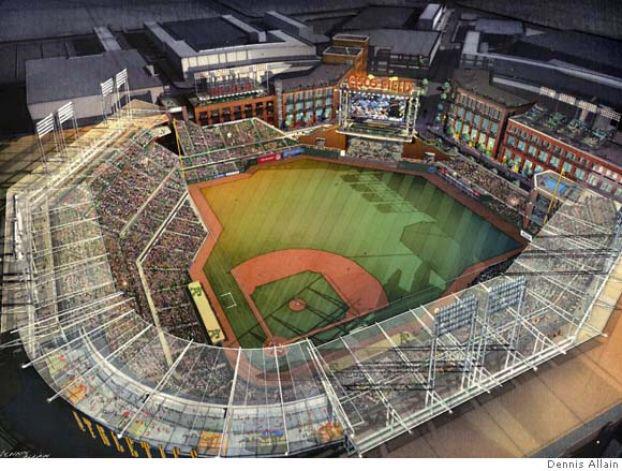
The third city I think makes sense to consider would be New Orleans Louisiana. New Orleans, similarly to the other two cities I’ve named so far, is home to many other sports teams. With a population of 384,000 citizens, and some of the best events the United States has to offer in New Orleans driving tourism, New Orleans would be a great candidate for an expansion franchise. The New Orleans Saints averaged just shy of 69,000 fans per game, which was good for 15th in the NFL. In addition to the thriving Saints franchise, the New Orleans Pelicans averaged just shy of 16,780 fans per game in 2023, which was good for 26th in terms of NBA attendance. Given these really strong attendance figures in their NBA and NFL franchises, there’s absolutely no doubt that New Orleans could support an expansion franchise. With the huge tourism numbers New Orleans regularly records, they also have lots of possibilities for large crowds throughout the year. With lots of attempts to bring baseball to New Orleans, and the significant attendance numbers, I give New Orleans an interest index rating of 9/10.
The fourth and final city I think makes the most sense to consider would be, Nashville Tennessee. Similarly to New Orleans, due to it’s large popularity in the country music industry and more, Nashville would bring in lots of tourism numbers throughout the year. With a population of 689,000 residents as of 2020, their population could definitely support an expansion franchise. Nashville is proud to be called the home of both the Tennessee Titans, and Nashville Predators as well. The Tennessee Titans averaged just over 68,600, which was good for 17th in the NFL. Not only is this number impressive, but the Nashville Predators were responsible for some of the highest average NHL attendance numbers, coming in at almost 17,400 fans per game. So, as you can see, the city of Nashville Tennessee can without a doubt support an expansion franchise. The city of Nashville also is home to the triple-a affiliate Nashville Sounds, who were also responsible for high attendance numbers, coming in at around 6,800 fans per game. With strong attempts to add an MLB team in Nashville, and strong attendance numbers the whole way around, I would give Nashville a 9/10 rating on the interest index scale.

In conclusion, I would propose the idea of expanding to Salt Lake City, and Charlotte first, due to those cities both having the strongest overall factors. While it’s important to note that New Orleans and Nashville may be better in some areas, Charlotte and Salt Lake City are some of the areas that would be less susceptible to stealing fans from another close franchise. Once we can prove that baseball can expand again successfully, I would add New Orleans and Nashville in the next round of MLB expansion.
Division Realignment
With the current structure of MLB divisions being 6 separate divisions, each including 5 teams a piece, MLB would have to add 6 teams to be able to keep this philosophy. Unfortunately, this would be far too many teams to be able to keep the game competitive, and the quality of baseball strong. A solution? Changing the structure of how baseball is laid out when it comes to divisions.
Similarly to the NBA and how they structure their league, baseball would need to make the switch to a two division league throughout all levels. These divisions would include an American League Division, and a National League Division.
The Postseason structure would still follow the model made and used in the 2022 season, meaning that the top six teams on each side would make the playoffs. Seeding would still be determined by records, but instead of having three divisions in the American League and National League, you would just have one division full of teams, all competing for a Postseason spot.
In my opinion, this change would make baseball more competitive overall, as there would be more chances to directly impact the seeding from top to bottom, throughout the entire season. With interleague play also becoming more prevalent than ever starting in 2023, the 3 division model is becoming more and more irrelevant.
As for where the expansion teams would be added, the American League would be receiving the Salt Lake City and Nashville expansion franchises. The National League would be receiving the New Orleans and Charlotte expansion franchises.
The final model would consist of 17 teams in the National League and American League, and Postseason brackets still following the 2022 model. Overall, these changes are likely on their way with or without MLB expansion being included, but this change would make baseball more competitive overall, and also better structured.
Expansion Draft
With the details of the cities receiving teams, and division realignment fully worked out, it’s now time to explain how the expansion franchises would put together their roster.
The MLB expansion teams would have to go through a draft in order to select their big league teams, and their minor league systems. There would be a few guidelines to how this would go on, but it shouldn’t be too difficult to sort out.
Current MLB teams would be allowed to select 12 major league players, and 8 MiLB players to be protected from being drafted. It’s also important to note that in order to be eligible for the draft, you have to be currently eligible for the Rule-5 Draft, or have previously been eligible. This would be to help teams save some of their recent MiLB talent, while also giving the new teams a decent amount of experienced talent themselves.
Each expansion franchise would take 1 MLB player, and 5 MiLB players to form their teams. The bottom 4 teams from the year previously, would be excluded from the draft. This would be to ensure that the teams who are still in the bottom of their rebuilding stage don’t lose valuable talent to them and their future.
Overall, this plan for an MLB expansion draft would leave the MLB team with a full 26-man roster, and a full MiLB system. Teams who participate in the draft will not lose too much talent, and it should be a win-win situation for both sides of the spectrum.
Finding Cities for Affiliate Clubs
While it’s important to note that the hardest part of MLB expansion would be finding cities willing to accept these new teams with open arms, there would also be the challenge of finding places for new MiLB affiliates. With the MiLB systems also following the two division model if they haven’t already, adding the teams shouldn’t be an issue whatsoever.
How would we find these new cities to expand baseball to? Well, we’d leave it up to the public. To be able to test the waters on interest levels within cities without placing an MiLB team where another potential MLB team could end up, we would need to leave it up to the highest bidders.
If baseball were to not find enough interest from asking the public, MLB would need to approach individual cities. Though, this should serve to be a relatively easy task for MLB to complete.
The levels each city would receive would all come down to geography and population size. The bigger the city, the higher level they would receive. And, depending on how close you are to other MiLB levels. Overall, this process could take some time, but could get done without much hassle.
MLB Relocation
In addition to the MLB expansion plan, MLB has a few more dilemmas on it’s hands. This comes at the hands of the Oakland A’s, and Tampa Bay Rays. Oakland is in a code-red situation currently, as they are barely drawing fans, their stadium is falling apart, and their team is very lackluster. Tampa Bay on the other hand is nearing the code-red level, with their ballpark location leading to fans having a difficult time reaching the stadium, they barely have any fans show up. How to solve both of these glaring issues? Relocate the franchises during the expansion period.
The team that should obviously take priority is the Oakland A’s. The A’s need to move to Las Vegas, and it’s becoming increasingly more obvious by the day. The city of Las Vegas has welcomed both the Golden Knights, and Raiders into it’s city with open arms, as both teams have been very successful in their moves. With Las Vegas being one of the USA’s tourism capitals, a population of 642,000 people, and precious successful sports teams, Oakland would be a great fit for the city of Las Vegas.

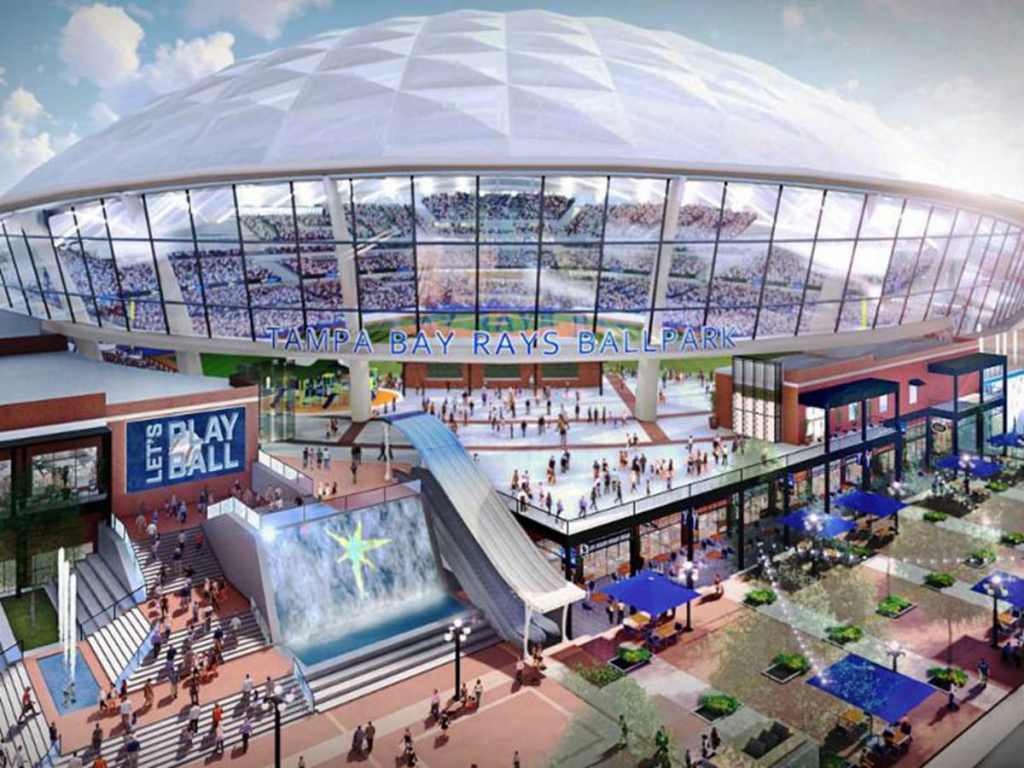
Tampa Bay differs from Oakland in the sense that their situation might not involve a full relocation. The factor that arguably contributes the most to Tampa Bay having bad attendance is their stadium location. The Tampa Bay Rays, are not even actually located in Tampa Bay. They are currently located in St. Petersburg, in a very difficult place to reach. The obvious choice here is to move the Rays to Tampa Bay, but recent attempts have been incredibly unsuccessful. If this move to Tampa Bay could not happen, Orlando and Jacksonville would be candidates for the next city that could host the Rays.
Getting the MLBPA and MLB Owners on Board
As those of you who paid attention to the MLB lockout know, the MLBPA and Owners association are not easy to negotiate with, or please. So how would we get them to support MLB expansion and an expansion draft? Well, we have to convince them of the positives of course.
If MLB were to expand, there’s no doubt that it would draw up more interest in the game of baseball, which would bring more fans. More fans obviously means more revenue. Revenue seems to be one of the few things that pleases owners, so if we’re able to convince them of revenue growth, there’s a good chance they agree. The division realignment brings more competitive play to every game, making many games must-watch TV. The protection slots in the expansion draft would be more than enough to protect their main talent also. So, between many of these changes boosting revenue and bringing more eyes to baseball, I think the owners would be on board.
We would not be done yet though, as we would also have to get the MLBPA on board. The main way we’d do this? Through showing benefits to the players. With more teams being added, there would be much more opportunities for MLB players to get playing time and experience. If the MiLB players continue to unionize with the MLBPA, the same goes for them on arguably a larger scale. Not only would more teams provide more opportunities for players, but more teams would mean more competitive free agent markets. This would lead to the players getting paid more money in free agency, something the MLBPA is very passionate about. So, all things considered, I think the MLBPA would have our backs as well. Now, the only thing to do would be to actually expand.
Final Thoughts/Plan Recap
In conclusion, MLB expansion is something that could severely help MLB to grow, and something that needs to be done. Assuming we have both the MLBPA and MLB owners on board, it’s time to iron out the final expansion plan.
• MLB would expand to Charlotte and Salt Lake City first to prove that expansion can still be a successful process. Once that expansion was successful, MLB would expand to Nashville and New Orleans as well. The gap between this expansion could take anywhere from 2-5 years, that way we can fully see and measure the success of the original expansion.
• MLB would also relocate the Oakland A’s to Las Vegas, and Tampa Bay Rays to Tampa Bay, Orlando, or Jacksonville during this time.
• New teams would fill their rosters through an expansion draft. Teams can protect 12 MLB players, and 8 MiLB players to keep from being draft eligible. MiLB players with Rule-5 eligibility, or players that are past that eligibility would be draft eligible in the MiLB. The bottom 4 clubs from the previous season would be excluded from participating in this draft.
• MLB division realignment would take place, moving to a two-league model rather than the current 6 league model. Charlotte and New Orleans would become NL teams. And Salt Lake City and Nashville would become AL teams.
• New affiliates would be assigned through the highest bidders. If MLB does not receive enough support in terms of bidding, MLB will approach cities to host MiLB expansion teams.
• Team names would include the Salt Lake City Slopes (Named after the extensive amount of ski slopes and resorts in SLC), New Orleans Celebrators (Named after the Mardi Gras celebrations and parties every year) Nashville Guitars (Named after the extensive history of country music in Nashville) and finally the Charlotte Queens (Named after Charlotte being referred to as the “Queen of the South”).
Finally, I personally believe that MLB expansion is something that MLB should heavily consider, especially as they look to expand the interest and popularity of our great game across the country. With groups being very interested in bringing a team to their cities, there’s no reason not to entertain the idea. The plan I laid out is what I personally would try to do if I were commissioner during an MLB expansion period, and it’s something I think could really work if MLB were to expand once again. It’s fair to all teams, including the expansion clubs. MLB expansion is a great way to grow the popularity and competitive aspects of our game, and is something that should really be considered going forward.
 BSBWRITES
Leave a comment