Going into the later part of the 2020 calendar year, MLB had an interesting dilemma on it’s hands, MiLB affiliates, and how they should manage them going forward. After being a hot topic of discussion amongst Rob Manfred and other MLB executives for a few years, MLB decided to go forth with their plan to cut down on their MiLB systems, and shrink down to 120 farm teams. While this angered most MLB fans especially fans in cities where they lost their teams, this created a new dynamic among how teams would manage their prospects, especially newly drafted players. Typically, prospects fresh out of the MLB Draft would head to the short-season A leagues, but after being eliminated, there’s room for a lot of possibilities. In 2023, this player assignment track is one of the hottest topics in all of baseball, especially surrounding Dylan Crews, and Paul Skenes. In today’s article, we’ll be talking about this new age of advancing prospects through the MiLB quickly, and whether or not it’s good for baseball.
What Teams Used to Do, and What They Have Moved Towards Now
Before the decision to cut MiLB teams was officially made, MLB teams had far more options for what to do with their draft picks during the season where they were selected. But, most teams stuck to using a few levels for their new players. These levels typically included Short Season A, the Complex Leagues, and the Class A affiliate. Short Season A however was the most common. This was mainly due to the fact that the Short Season A level wouldn’t start until after the MLB Draft, which made it much easier to throw new draft picks into the mix of affiliated baseball. Another reason this made sense was due to the fact that it gave players a chance to start fresh with a team, rather than join a group of players who had been together for the entire season. In addition, most players in Short Season A would remain there for the rest of the year, as teams would be less inclined to promote their players off the bat.
Many players would again prefer this fresh start with a new team as opposed to joining a team who had been playing for the entire year because they felt this made the transition to pro baseball much easier. While this transition is tough already, it made it easier when the majority of your teammates were also facing the same challenge of pro integration. Not only this, but the competition would relatively be around the strengths of a new player, due to the amount of people coming out of the draft to that level. However, this change was much harder for high school draft prospects jumping to this level.
The struggles of a new prospect coming out of high school to the pro level would be immense, especially going from a fresh high school graduate, to playing with college graduates in pro baseball. So, for many high school prospects, they would end up taking their talents to the Complex Leagues, or Coast Leagues. This is mainly because high school prospects would require more development, and would often be watched more closely by their new Major League Clubs, rather than being tossed into the mix of pro baseball. Also, being in these lower levels made the new jump to pro ball feel easier, and without a lot of added pressure.
Now in 2023, these level changings are much different. Instead of having the Short Season A levels, teams are now left with the Coast League, Single-A, High-A, Double-A, and Triple-A. This change in affiliates provided teams with the new challenge of integrating their freshly drafted prospects into pro baseball without the option of the Short Season A level. Without this extra level, teams have tended to use their new prospects in two general ways. Most college players begin their pro careers at Single-A, and now have the ability to work their way up the system quicker as teams are more willing to promote their college prospects compared to how they used to be. In addition, most teams still typically send their high school prospects to the Complex Leagues to prepare them for their full jump into affiliated baseball.
This new way of alignment tends to be pretty helpful, especially among new high school prospects. From what I’ve heard, being placed in Complex Leagues to start makes the pro ball transition much easier for these young players. They get to play with their peers, have less media attention, and more. As for college players, this new dynamic is much more interesting for them. As previously mentioned, college prospects typically begin their careers at Single-A. But, these players also have the chance to start higher, and advance further through the ranks. This is due to their ages, and the new found skill level in college baseball that we’ll cover more in depth later on. But, as you can see, the player alignment has changed so much over the years, and it’s important to know just how much before we continue.
Can Promoting Your Prospects be Successful? The Los Angeles Angels Would Like to Have a Word.
In the past few seasons, we’ve seen plenty of examples of teams being willing to utilize their prospects as soon as they can. This would’ve not only been unheard of a few years ago, but it’s still relatively scarce to see happening in 2023. The team who’s been the most willing to let their prospects fly through their MiLB systems? The Los Angeles Angels. Over the past two years, the Angels have promoted multiple draftees either during the year they were selected, or near the beginning of the next season.
The first name that comes to mind with Angels draft picks reaching the Major Leagues quickly is Reid Detmers. Detmers was selected in the first round by the Angels in the 2020 MLB Draft, and he would go on to make his debut on August 1st of 2021. This climb is almost unheard of given how the MLB used to handle newly selected players, but in the case of Detmers, giving him the chance to debut quickly might’ve been best. Detmers would only pitch in 14 games in the MiLB before his MLB Debut in 2021, but he hasn’t looked back since reaching the MLB. Detmers would get hit around in 2021, but the Angels would stay a believer in Detmers, as he would pitch really well in his first MLB season in 2022. During this season, Demters would make 25 starts where he would pitch to a 3.77 ERA, 2.3 fWAR, 22.6% K%, and a 3.79 FIP. In addition, Detmers would also throw a no hitter during his 11th career start, which was an incredible feat. Detmers is currently pitching solidly for the Angels in 2023, as he currently has a 4.44 xERA, with a 27.3% K%.
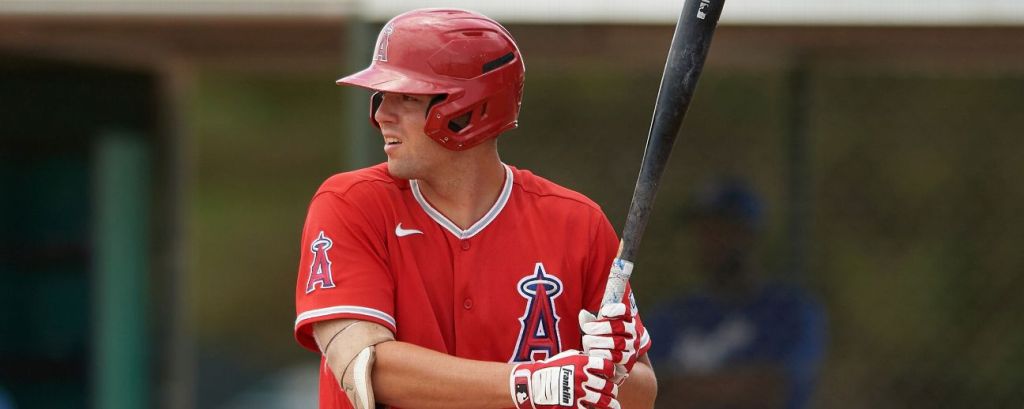
In addition to Detmers, the Angels would follow up this move by promoting Zach Neto, their 2022 first round pick only one year later in 2023. Since joining the Angels in the majors this year, Neto has been a key role player for most of their 2023 season, but has unfortunately battled some injuries that he may still be fighting. But, Neto has still demonstrated key tools which will help him later on in his career, which is especially impressive since he skipped Triple-A all together. Neto has only played a mere 67 games, but in these 67 games he’s hit 8 homers, 4.8% BB%, 21.4% K%, .326 xwOBA, 99 wRC+, 0.9 fWAR, and a barrel percentage of almost 10%. Neto has shown signs of being a really good player, but as I previously mentioned, I can’t help but think his mid-season injury plagued his rookie season slightly, as he had a wRC+ of above 115 before he was injured. Neto has demonstrated solid plate discipline, as well as a mature approach which is very impressive from a player his age.
The final player we will be touching on from the Angels is the most obvious example of a move that wouldn’t have even been a thought 5 years ago, and that is the promotion of Nolan Schanuel. Schanuel was selected in the first round of the 2023 MLB Draft by the Angels, and he would make his MLB Debut less than six weeks after he was drafted. This isn’t the quickest a player has been promoted, but it certainly is up there in the sense of urgency to promote players. Schanuel has barely played as of the time I’m writing this, but this move was certainly a shocking one. While it is true that Schanuel has crushed MiLB pitching, it’s very shocking as to why this move was made. Schanuel is beyond talented, but the move certainly had fans wondering why the Angels didn’t let him develop longer.
These three promotions by the Angels have been the most obvious examples of teams being willing to utilize their talent, even when they’re fresh off of the start of their pro careers. These moves of course also excluded the promotion of Ben Joyce, a flamethrowing right-handed pitcher who was also selected during the 2022 MLB Draft, and made his MLB Debut just a year later. In the case of the Angels however, these moves have certainly not been bad for the franchise, as you could argue Neto and Detmers have already cemented themselves as important parts of a struggling Angels team. But, as previously mentioned, these moves would have not even been a thought a few years ago, as instances like these were so far and few in between that they basically never happened. The Angels have been the leaders of this new dynamic of promoting your prospects, but they are certainly not the only team doing this, as teams such as the White Sox and Giants have been seen doing the same thing.
Crews and Skenes: Rising Quickly and Sparking Debates
After the conclusion of the 2023 MLB Draft, fans saw the talents of Paul Skenes and Dylan Crews both be selected by their clubs, but this may not be the most interesting thing to happen surrounding these two superstars. Both Skenes and Crews are generational talents who both played together in college in the SEC, which is the conference many consider to be the best in all of college baseball. Not only is the SEC very good, some have said the talent level is equivalent to the Double-A level.
Naturally, Skenes and Crews would each spend a few days in the Florida Complex League to get acclimated to pro baseball before ultimately making their way into pro baseball. Crews and Skenes would both start in their club’s Low-A affiliates, where they would both play fantastically. Crews would spend two weeks in Low-A, where he would hit 5 homers, 8.5% BB%, .485 wOBA, and a 192 wRC+. As you can see, Crews would play incredibly well, and he would then earn his promotion to Double-A Harrisburg. Skenes on the other hand, would throw just 3 innings in Low-A, where he was also spectacular. In those 3 innings, he would strike out 4 batters, while also allowing no runs. Pittsburgh would decide they’ve seen enough of Skenes in Low-A, and he would immediately be promoted to Double-A. Although Skenes is still awaiting his first Double-A start, he should continue to shine bright in Double-A.
Although the organizations seem to have figured out what they want to do with Skenes and Crews, the idea of rushing the two prospects through the minors has been a hot topic amongst fans. Although neither prospect has seen their share of struggles yet, they should eventually face some adversity in the minors. But, with how they’ve played so far, I don’t think there’s any issues with seeing how they can do in higher levels. But, many fans think they should be playing much longer at their respective levels before moving up the rankings. Although the way I look at it is when they play well enough to be ready, why not move them up so they can impact your team sooner? And that seems to be how their MLB teams think of it as well
Conclusion
Major League Baseball is far and beyond the hardest game in the world, and the level of talent in our game is only getting better. If new prospects are advanced enough to move the rankings, they should be doing just that, even if it means the older way of keeping the prospects in lower levels has to end. There should however be no problem with letting prospects play in the MiLB a little more to prepare them for the MLB level, which is one of the hardest adjustments in all of sports. With that being said, I’m really excited for this new age of talented prospects, and what they bring to the game of baseball.
 BSBWRITES
Leave a comment